23 September 2026
Custom Wine Bottle Boxes: The Specs to Send Before Artwork
Custom wine bottle boxes get specified from the bottle outward, not from the artwork inward. Before anyone opens a design file, send us the bottle diameter and height, whether it is one bottle or two, and the insert type you want. Those three answers decide the structure, the board weight and the finish. Everything else follows.
Start with the bottle, not the artwork
Measure the bottle you will actually pack. Not the nominal 750 ml, the real one. Bordeaux, Burgundy and Riesling shapes differ in shoulder height and base diameter, and a sparkling bottle is wider and heavier again. Diameter and total height are the two numbers that drive everything. Get them wrong and the insert either grips nothing or you cannot close the lid.
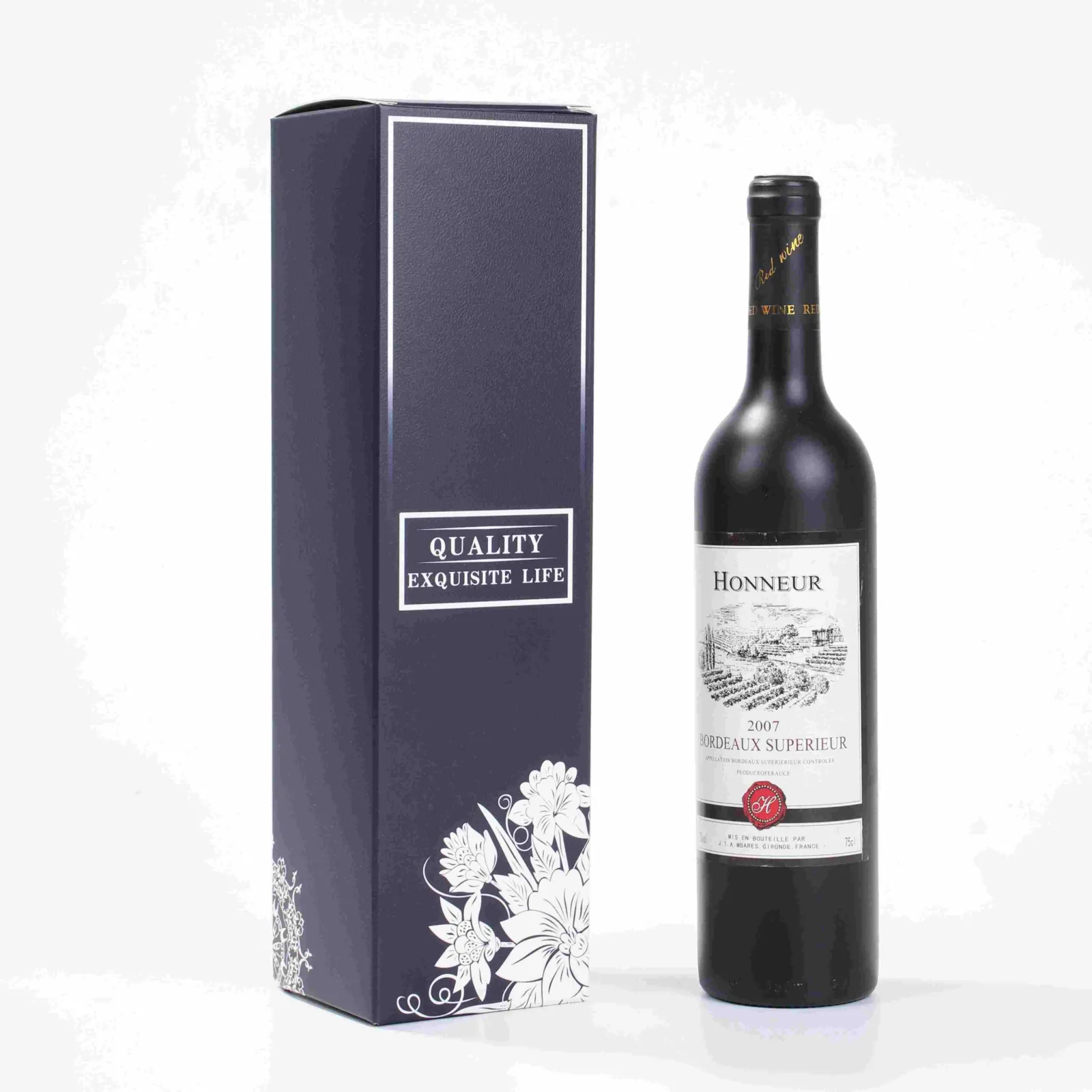
Then tell us the count. One bottle or two changes the whole geometry, and it changes which of our pages is relevant to you. If you're packing a single bottle, look at single-bottle wine gift boxes. For a pair, the layout questions are different: side by side, angled, or stacked, and whether the two bottles touch. They shouldn't.
Artwork comes last, and it should. A beautiful print on a box that lets the bottle rattle is a refund waiting to happen. Decide structure, insert and board first. Then we talk about paper, foil and colour.
The six structures we make
Rigid lid-and-base is the classic. A separate lid lifts off a solid base, and the walls are thick enough to feel substantial in the hand. It's the safest choice when the unboxing moment matters and you don't need the box to fold flat.
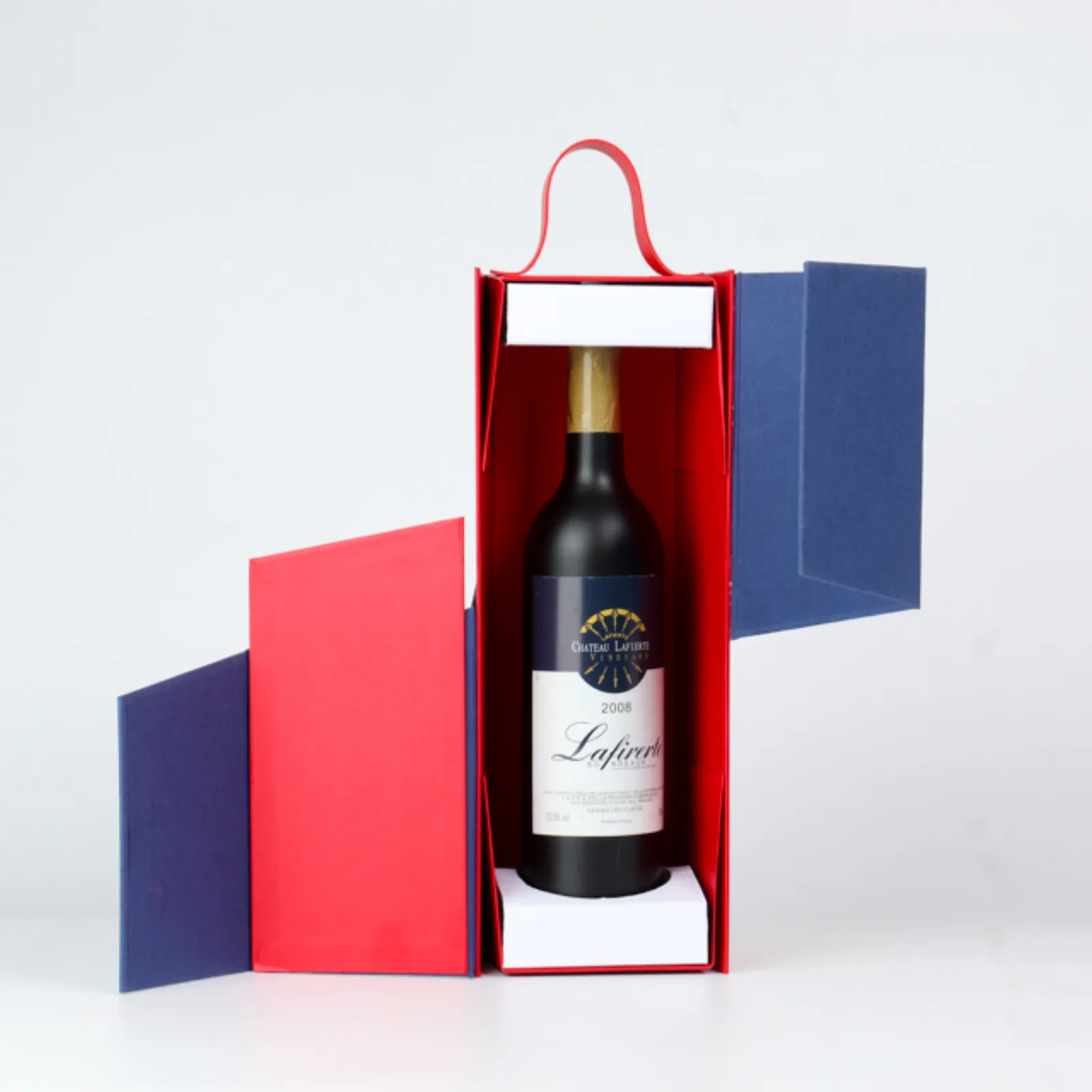
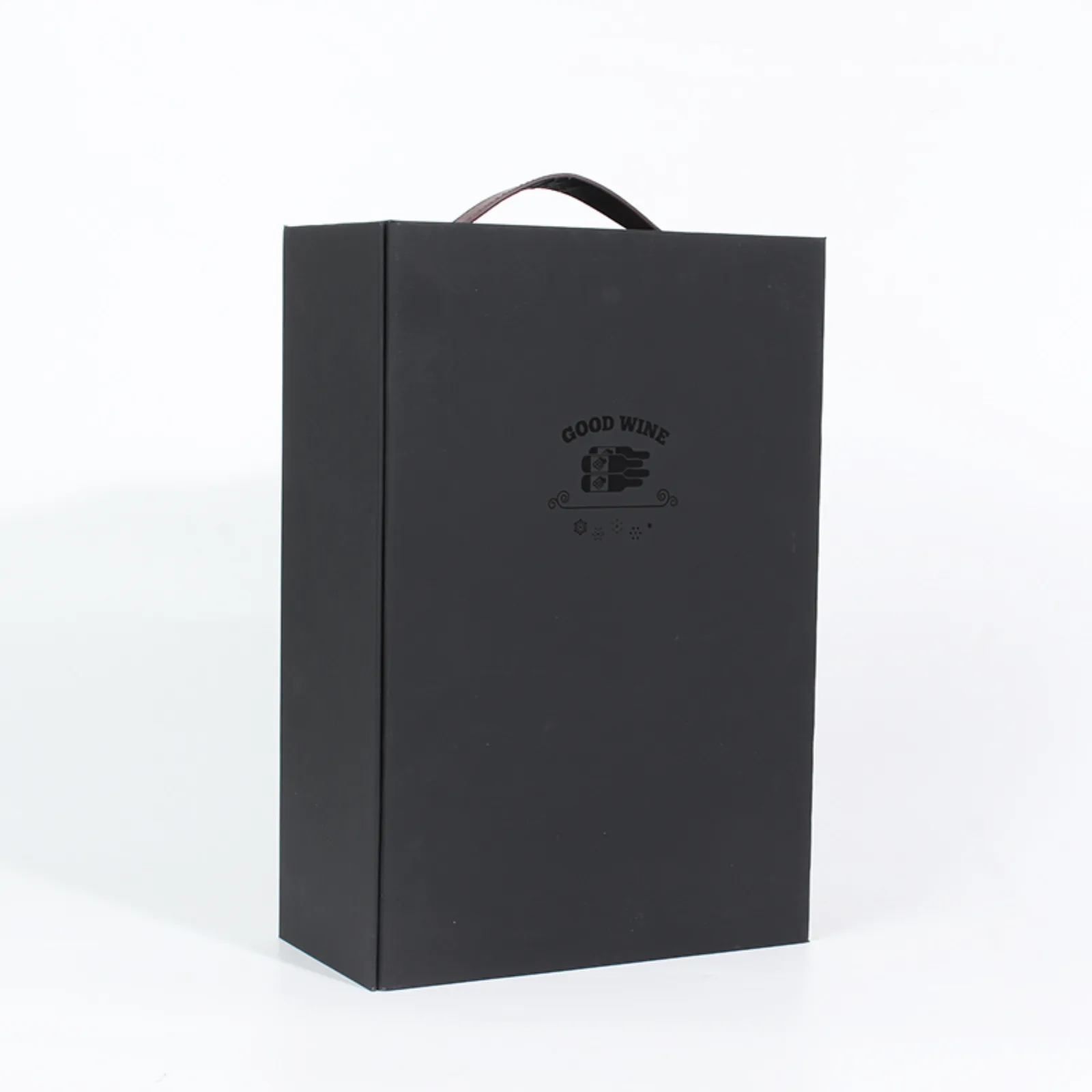
Magnetic closure uses hidden magnets so the lid snaps shut. It reads as premium and it opens one-handed, which corporate gift buyers tend to like. Drawer slides the bottle out horizontally. Foldable ships flat and erects on site, which suits gift companies holding stock in a small space. Double-door opens from both sides and puts the bottle centre stage. Handles turn the box into a carry case, useful when the recipient has to walk it into a venue.
Each one carries a trade-off. Foldable saves storage and adds a crease that has to survive handling. Magnetic feels better and adds a magnet position you have to hold. There's no universal winner. Tell us how the box travels and how it's opened, and the structure picks itself. More on how these are built sits on the custom wine gift box manufacturing page.
Four insert types and how to choose
Velvet tray gives the deepest premium feel. The bottle sits in a lined recess and the material reads expensive the second the lid comes off. It's the right call for gifting, and the wrong call if your bottle shape changes between orders, because the tray is cut to that shape.
EVA foam handles unusual bottle shapes best. It compresses around a shoulder that isn't quite standard and it survives shock well. Blister gives a tight, precise hold on a standard bottle, and it's the cleanest look when the bottle is the hero and you don't want texture competing with it. Paper mould, the moulded pulp tray, is the one to pick when a natural, uncoated look matters and the buyer is deliberately avoiding plastic.
Mix them if you need to. A foam base with a velvet top face is common. What you can't do is leave the neck or shoulder unsupported. That's the rule, and it's absolute.
The insert rule: the bottle must be held at four points, with no unsupported neck or shoulder. We check it three ways. Shake the loaded box for 10 seconds and nothing should move. Tilt it 45 degrees and the bottle should not slide. Invert it and the bottle should not release. If any of those three fails, the insert goes back to the drawing board. This is the single most common reason a gift box gets returned.
Tolerances and board weights
Our control tolerance is insert plus or minus 1 mm and box body plus or minus 2 mm. On foldable boxes the creases must not crack, magnet position is held to plus or minus 1 mm, and corners must sit at 90 degrees when the box is erected. Those numbers are what we hold to during production, not a promise about every unit that leaves the building. They're the target the tooling and the assembly are set against.
Board: greyboard 1200 g minimum, and 1400 g for spirits. A heavy bottle in a light board flexes, and a flexing wall cracks the facing paper at the corner. Facing paper is 157 g minimum, specialty or coated. We don't run recycled greyboard and we don't run high-moisture paper. Moisture is the quiet killer. It warps the board after printing, and the warp shows up as a lid that won't sit flat.
If you want the fuller picture on grades and facing options, the materials and structures page lays it out. The short version: heavier board costs more and protects better, and spirits usually justify it.
Colour control and the hard colours
We match to Pantone, we approve a first article, and we sample again mid-run. Three checkpoints, because one isn't enough on a large run. The first article tells you the colour is right on the material you chose. Mid-run sampling tells you it stayed right after the press has been running.
Black, deep blue and burgundy are the hardest to hold. All three are dense, and small shifts in ink film or drying show up as a visible difference between the lid and the base. If your brand colour is one of those, expect to look at a physical sample rather than a screen proof. On a two-piece box, print the lid and the base in the same pass where you can. It removes the variable.
Colour is also where buyers overspecify. A spot colour on a coated facing paper behaves differently than the same spot on an uncoated one. Pick the paper first, then approve the colour on that paper. Our quality control process covers how the checkpoints run.
Failure modes we see
A bottle that moves in transit. Nine times out of ten the insert was cut to a nominal bottle size, not the real one, or the neck was left floating. Fix the insert before you fix anything else.
A foldable crease that cracks. This shows up when the board is too heavy for the crease line, or the facing paper is brittle. It usually appears on the second or third fold, not the first, so check a box that's been opened and closed a few times.
A magnet that sits off position. On a magnetic closure, a magnet a millimetre out means the lid pulls to one corner and the gap is visible. That's why we hold magnet position to plus or minus 1 mm.
A lid that doesn't sit square. Warped board, uneven assembly, or a base that was trimmed out of tolerance. Check it on a flat surface, not in your hand. And run the pre-shipment checks: a 1.2 m six-face drop with the bottle loaded, a stacking top load of 40 kg or more for 24 hours, and truck and sea vibration simulation with no internal movement allowed.
When our product is the wrong answer
If you only need to get bottles from A to B with no presentation, a plain corrugated shipper is the better fit. It's cheaper, it protects, and nobody's judging the unboxing. Don't buy a rigid gift box for that job. You'll pay for finishing you don't need and you'll still have to pack it inside something else.
The same goes for a one-off. If you're sending a single bottle to a single client, a stock box and a good bag will do. Custom tooling makes sense when the box repeats, when the brand has to show up the same way every time, and when the recipient is someone you want to remember the moment.
So the honest question is this: is the box doing presentation work, or is it just transport? Answer that and the spec gets a lot shorter.
What to send us
Send box dimensions, or better, send a bottle sample. We'll measure it ourselves and you won't have to guess at the shoulder. Tell us single or double, and which insert type you're leaning toward. Send a reference design if you have one, even a rough sketch or a photo of something you like. Tell us the quantity and any special requirements, like a window, a ribbon, a handle or a printed sleeve.
With those in hand we can confirm structure, material and finish, and come back with a clear picture of what you're buying. Two sample types are available: a blank sample to check structure, and a printed sample to check the visual. Reach us through the quote form or at [email protected]. We work with customers in over 30 countries, mostly in Europe and North America, and we've been doing this since 2014.
Double bottles and gift bags
A pair of bottles in one box is a different problem. The two bottles have to be held independently, because a shared cavity lets them knock against each other in transit. If you're going that route, the layouts are covered on the double-bottle wine gift boxes page, and the insert rule still applies to each bottle on its own.
Gift bags are the lighter option. A felt or canvas bag with a rigid base is enough when the bottle travels by hand and the recipient carries it away. It won't survive a courier the way a rigid box will. Choose based on how the gift actually reaches the person.
Key points
- Measure the real bottle, not the nominal size, before anything else.
- Four points of contact, no unsupported neck or shoulder, always.
- 1400 g greyboard for spirits, 1200 g minimum for everything else.
- Black, deep blue and burgundy need a physical sample, not a screen proof.
- If there's no presentation need, a corrugated shipper is the cheaper right answer.
Questions buyers ask
What measurements do I need to send for custom wine bottle boxes?
Bottle diameter and total height, the bottle count, and the insert type you want. A physical bottle sample is better than numbers, because we can measure the shoulder ourselves. Send a reference design and your quantity too, and we can confirm structure, material and finish.
Which insert should I pick for a premium gift box?
Velvet tray gives the strongest unboxing moment and suits gifting. EVA foam is better when the bottle shape is unusual. Blister holds a standard bottle tightly with a clean look. Paper mould suits a natural finish. Whatever you pick, the bottle needs four points of contact with no unsupported neck or shoulder.
Why do foldable boxes sometimes crack at the crease?
Usually the board is too heavy for the crease line, or the facing paper is brittle. It often shows on the second or third fold rather than the first, so test a box that has been opened and closed a few times. Creases must not crack, and corners must sit at 90 degrees when erected.
Send your bottle dimensions or a bottle sample, a reference design, your quantity and any special requirements, and we'll confirm the structure, material and finish. Get a Quote
Put this on your bottle
Send the bottle sample or dimensions, quantity and a reference design. We reply with structure options and pricing.
- Email[email protected]