23 September 2026
Custom Whiskey Box: What Spirits Buyers Must Specify
A custom whiskey box is not a wine box with different artwork. The bottle is heavier, the shoulder sits higher, and the box has to hold that mass through every hand it passes. So the spec starts with board weight and insert geometry, not print. Get those two wrong and no finish will save the unboxing.
Board weight comes first
Our board standard is simple. Greyboard 1200 g minimum, 1400 g recommended for spirits, with facing paper 157 g minimum specialty or coated. No recycled greyboard, no high-moisture paper. That last part matters more than buyers expect. Moisture in the board moves during shipping, and a box that was square at packing can bow by the time it reaches a shelf.
Why 1400 g? A full 750 ml whiskey bottle is a lot of dead weight sitting on one small footprint. Thin board bows at the base. You see it first as a rock, then as a gap at the lid seam, then as a box that will not stand flat in a retail row. The 1400 g board changes the feel of a rigid lid-and-base or magnetic closure box. It resists that bow, and it gives the lid a heavier, more deliberate close.
If you want to see how board choice sits next to structure and finish options, our materials and structures page lays it out.
Insert geometry holds the bottle
The insert is where most whiskey boxes fail. The rule is four points of contact, no unsupported neck or shoulder. The bottle gets held at the base, the lower body, the upper body and the neck, so no single point takes the load. If the shoulder rests on the insert, the bottle hangs. That is a crack waiting for a courier van.
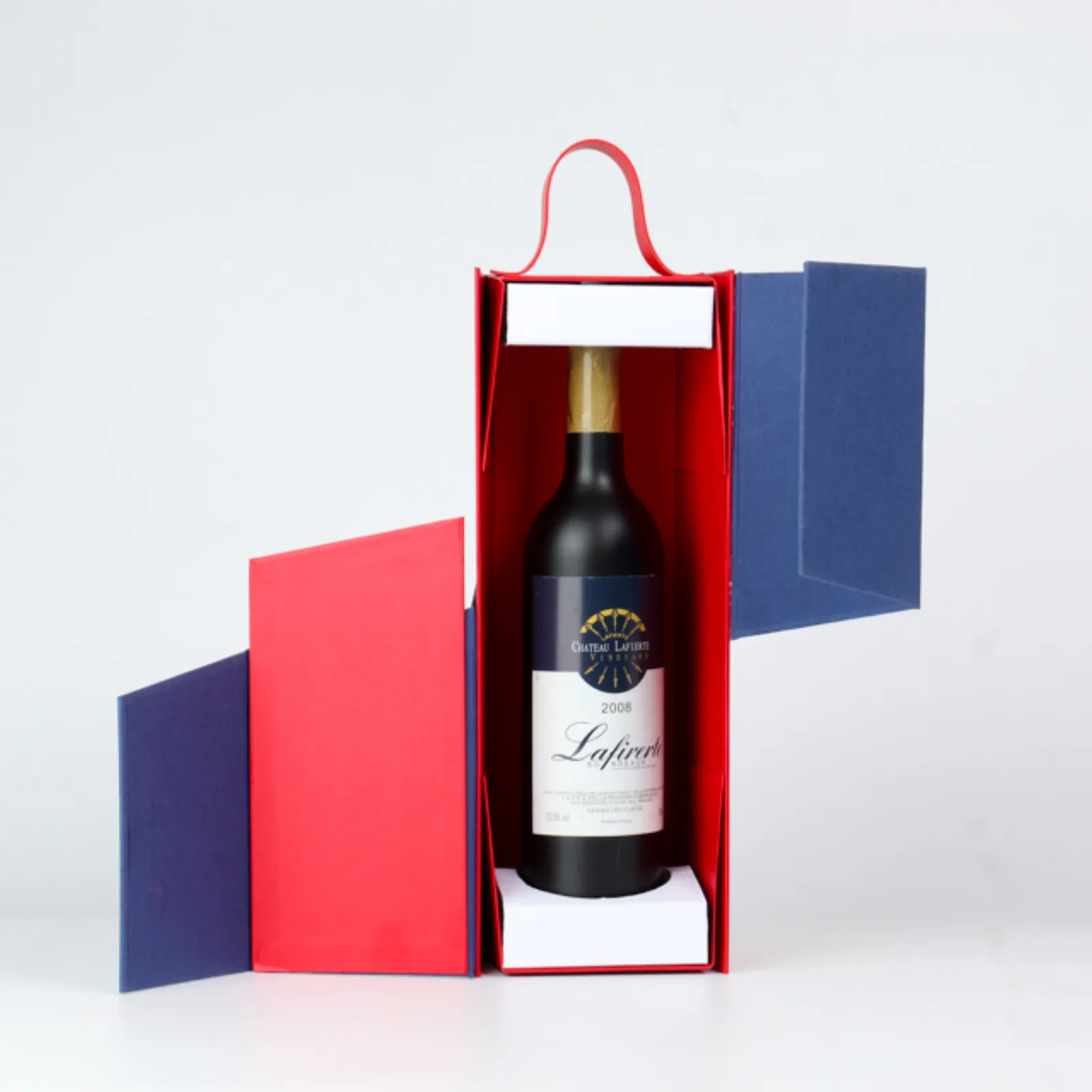
The seat also has to be deeper than a wine box seat. A whiskey bottle base is wider and the centre of gravity sits higher, so the pocket needs more wall around the base to stop it tipping. You have four insert options. Velvet tray for the unboxing moment. EVA foam when you need cut-to-shape support around an odd bottle. Blister for lighter bottles. Paper mould for a drier, more natural look. Each one trades something: velvet shows every mark, EVA is the most forgiving on fit, blister is the lightest, paper mould has the least give.
- Our control tolerance is plus or minus 1 mm on the insert and plus or minus 2 mm on the box body.
- Shake the loaded box for 10 seconds: no movement.
- Tilt it 45 degrees: no slide.
- Invert it: no release.
- If any of those checks fail, the insert is wrong, not the bottle.
Structure: when foldable is wrong
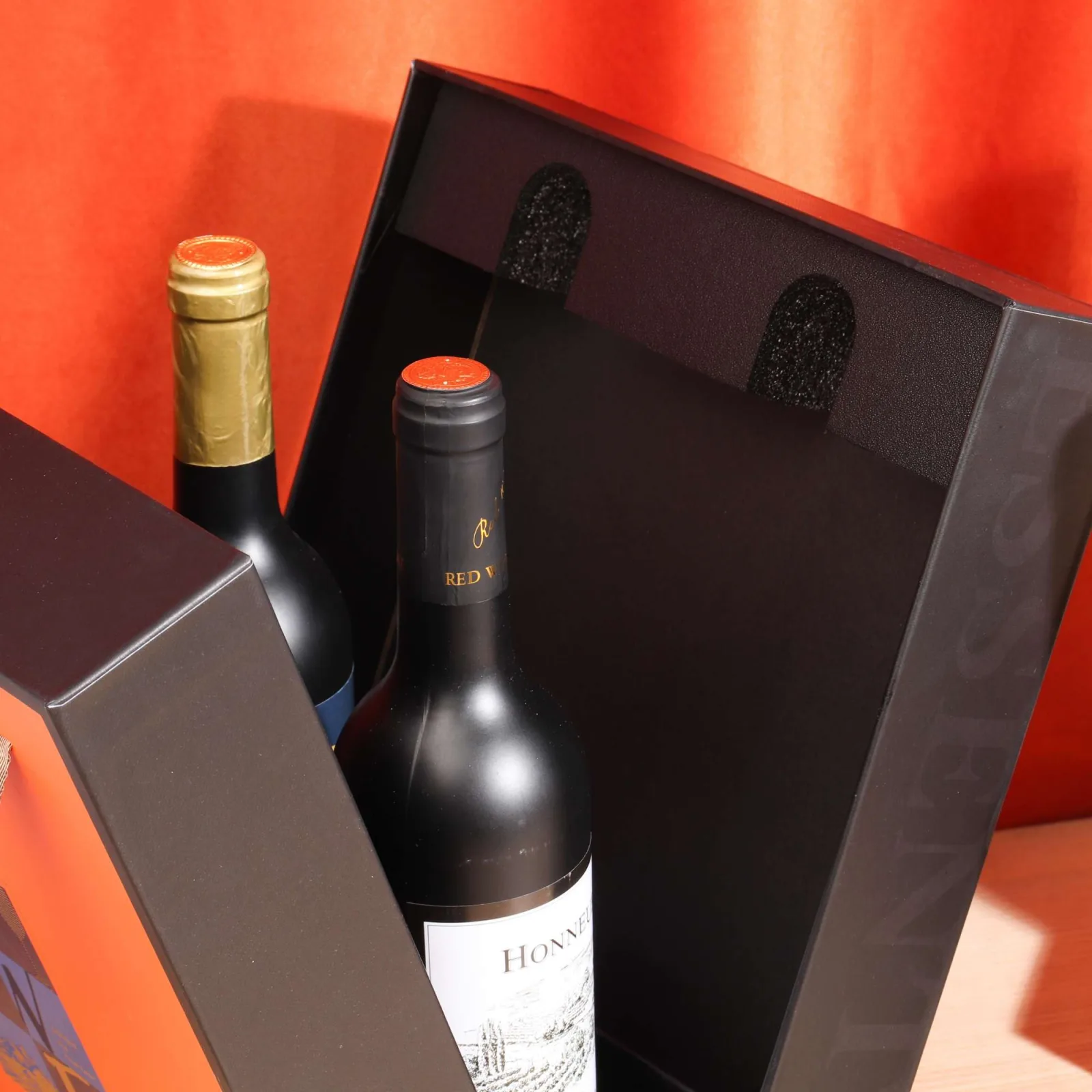
Rigid lid-and-base, magnetic closure, drawer and double-door all work for spirits. The lid-and-base gives the cleanest reveal. Magnetic closure adds a soft pull and a repeatable close, but the magnet has to sit right. Drawer and double-door suit a set or a gift pair, where the buyer wants a slower opening.
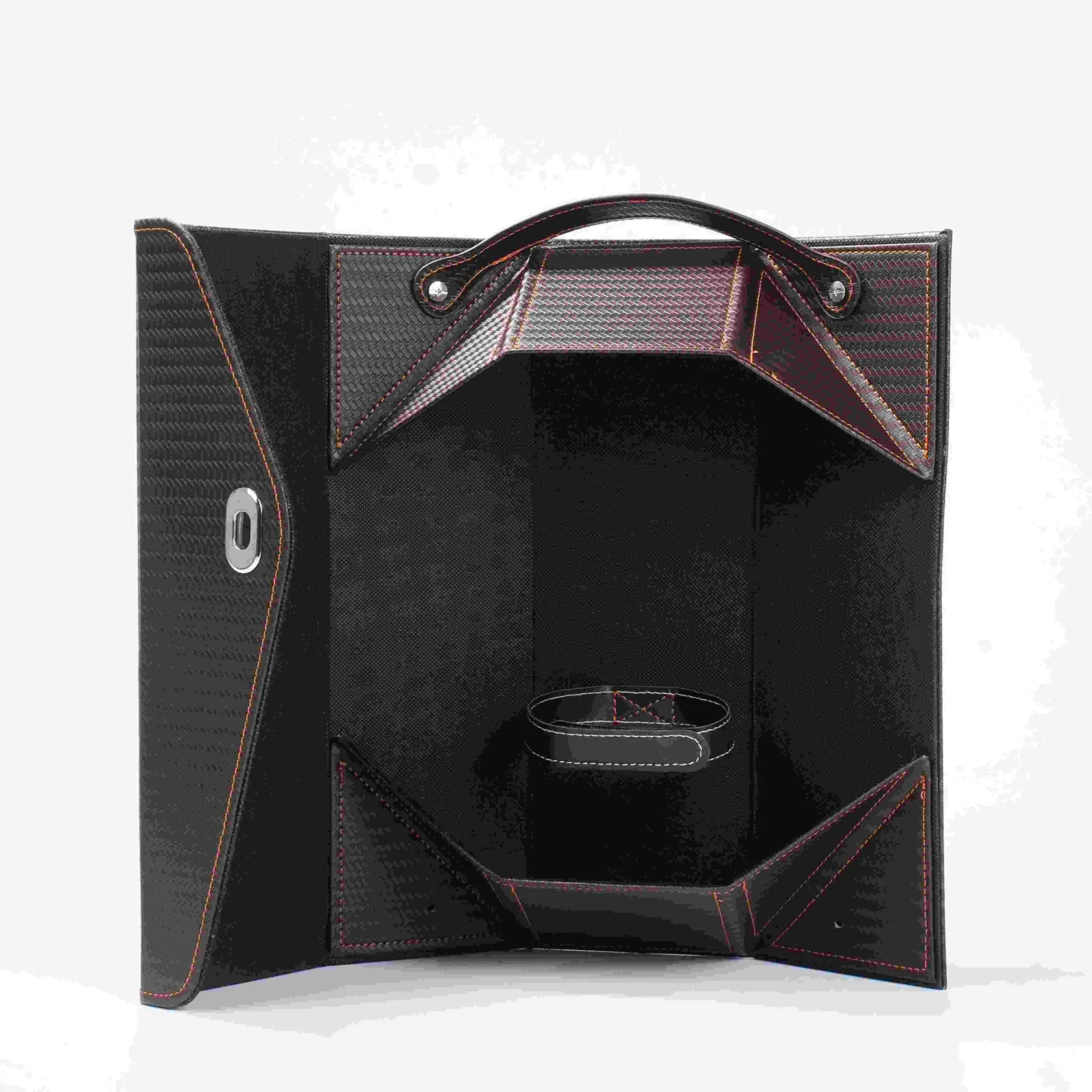
A foldable box is the wrong answer for a heavy spirits bottle. Foldable structures rely on creases and a thinner wall to collapse flat. Under a full bottle, the base panel flexes, the creases take the load, and the box loses its shape. If you like the foldable format, keep it for lighter bottles or for a wine gift box, not for a 750 ml whiskey bottle with a high shoulder.
For a single heavy bottle, a rigid single-bottle spirits gift box is the structure that holds up.
Finishes and colour control
Colour is the part buyers underestimate. We control it with Pantone matching, first-article approval and mid-run sampling. The first article is the reference. Mid-run sampling catches drift before it becomes a whole pallet of off-shade boxes. Black, deep blue and burgundy are the hardest to hold across a run. They show every shift in ink density and every difference in paper batch. If your brand colour is one of those three, expect to spend more attention there, not less.
High-gloss finishes bring their own risk. Facing paper can blister when the glue and the coating fight each other. A matte or soft-touch finish hides more and reads calmer on a whiskey shelf. It also shows fewer fingerprints when a buyer picks the box up.
Failure modes we see
The first is an insert that is too shallow, so the shoulder takes load. The bottle looks fine in the sample room and cracks in transit. The second is magnet position drifting, so the lid lifts at one corner and the box never sits flush again. Our control tolerance on magnet position is plus or minus 1 mm, and that is the number that keeps the close clean.
The third is corners that are not square after erection. A rigid box has to hit 90 degrees when it stands, or the lid will not align and the insert will not seat. The fourth is facing paper blistering on a high-gloss finish. You can catch all four in a sample before you commit, which is why we check them at the sample stage and again in our in-house quality checks.
When we are the wrong answer
If you want a lightweight shipper for a single bottle, a corrugated shipping box is the better fit. Corrugated is built for the journey, not the reveal, and it costs less to move. If your bottle is a standard wine shape, a wine gift box is the right starting point. The seat depth and the shoulder height are different, and forcing a wine box onto a whiskey bottle creates the exact shoulder-load problem we spend this whole guide trying to avoid.
We would rather tell you that now than build a box that fails your unboxing. For a spirits bottle, the liquor packaging guide walks through what changes when the product is spirits rather than wine.
What to send us
Send box dimensions or a bottle sample, a reference design, your quantity and any special requirements. A bottle sample is the fastest way to get the insert geometry right, because we can measure the base, the shoulder and the neck directly. A reference design tells us the finish and the colour direction. Special requirements cover anything unusual: a window, a ribbon, a specific opening feel.
We offer two sample types. A blank sample shows structure, so you can hold the box and test the fit. A printed sample shows the visual, so you can approve the colour and the finish. Most buyers want the blank first, then the printed. If you are ready to start, our custom wine gift box process page covers how the project runs from design confirmation through to packing.
Key points
- Specify greyboard 1400 g for spirits and facing paper 157 g minimum.
- Hold the bottle at four points; never let the shoulder take load.
- Check shake, tilt and invert before you approve the insert.
- Black, deep blue and burgundy need extra colour attention.
- A corrugated shipper beats a rigid box when the goal is transport.
Questions buyers ask
What board weight should a custom whiskey box use?
Greyboard 1200 g is our minimum, and 1400 g is what we recommend for spirits. The heavier board resists bowing at the base when a full 750 ml bottle stands in it, and it gives a rigid lid-and-base or magnetic closure box a more deliberate close. Facing paper should be 157 g minimum, specialty or coated.
How do I know the insert will hold a heavy whiskey bottle?
The bottle must be held at four points with no unsupported neck or shoulder. We check it three ways: shake for 10 seconds with no movement, tilt 45 degrees with no slide, and invert with no release. Our control tolerance is plus or minus 1 mm on the insert and plus or minus 2 mm on the box body.
Can I use a foldable box for a whiskey bottle?
For a heavy spirits bottle, no. Foldable structures rely on creases and a thinner wall to collapse flat, and under a full bottle the base panel flexes and the box loses shape. Keep foldable for lighter bottles or for a wine gift box. A rigid structure is the right answer for a 750 ml whiskey bottle.
Send your bottle sample or box dimensions through the quote form and we will come back with a structure and insert plan. Get a Quote
Put this on your bottle
Send the bottle sample or dimensions, quantity and a reference design. We reply with structure options and pricing.
- Email[email protected]