23 August 2026
Champagne Gift Box Design: Bottle Shape, Insert and Finish
A champagne gift box has to be built differently from a standard wine box. The base is wider, the glass is heavier, and the wire cage on the neck needs real clearance. You need a box shaped around the bottle's actual profile, not a wine box with a bigger cavity. Here's what we change.
Why a Standard Wine Box Fails
Most wine boxes are built around a Bordeaux or Burgundy profile. A champagne bottle breaks that geometry. The base is wider. The glass is thicker, so the bottle sits lower and weighs more. The shoulder slopes differently and the neck carries a wire cage and foil that add bulk. Drop a champagne bottle into a standard insert and it usually rests on the shoulder or the cage, not on the body. That's the first failure point.
Then there's the punt. Champagne bottles have a deep punt, so the bottle doesn't sit flat on a shallow base pad. And the weight. A full 750 ml champagne bottle can be noticeably heavier than a still wine bottle, which loads the base of the box during shipping. Put those three together and you get a box that looks fine on the shelf but fails when it's picked up, shaken or dropped.
Insert Design: Grip the Body, Not the Neck
The most common damage we see is a crushed cage or a broken neck. That happens when the insert holds the bottle at the shoulder or the neck. A champagne bottle needs four-point support on the body, below the shoulder, with extra clearance at the neck for the cage and foil. The body is the strongest part of the bottle. That's where the grip belongs.
A tight neck cavity is the most common damage cause in champagne packaging. The cage is wire. It deforms under pressure. If the insert touches it, the cage bends and the foil tears. We leave clearance around the neck, and we test that with the bottle loaded. The insert rule is simple: bottle held at four points, no unsupported neck or shoulder. Shake for 10 seconds and the bottle should not move. Tilt to 45 degrees and it should not slide. Invert and it should not release.
For champagne, we often use a velvet tray or EVA foam insert. Velvet gives a premium unboxing feel, while EVA foam holds the bottle more firmly. Paper mould is an option if you want a more sustainable look, but it needs careful shaping around the punt. The insert tolerance is plus or minus 1 mm. That matters more on a champagne bottle because the base diameter varies more than a still wine bottle.
- Four-point support on the bottle body, never the shoulder or neck.
- Extra clearance at the neck for the wire cage and foil.
- Insert tolerance of plus or minus 1 mm on the cavity.
- Test: shake 10 seconds, tilt 45 degrees, invert. No movement allowed.
Box Depth and Board Weight
Champagne bottles are heavy. The base of the box takes most of that load during shipping, especially if the box is stacked. We use greyboard at a minimum of 1200 g, but for champagne and spirits we recommend 1400 g. The heavier board resists compression and keeps the box from bowing at the base. It also helps the box hold its shape when the bottle is removed and reinserted.
Facing paper matters too. We use a minimum of 157 g specialty or coated paper over the greyboard. For champagne packaging, dark solids and metallics are common. Those finishes show scuffs and fingerprints more than lighter colours. A heavier facing paper helps, but it's not a fix on its own. The board underneath does the structural work.
Don't use recycled greyboard for champagne boxes. It's softer and it compresses under load. We don't use it. We also avoid high-moisture paper, because it can warp when the box is stored in a cool cellar or a humid warehouse. That's a real problem for champagne, which is often stored chilled.
Structure Choice: Lid-and-Base, Magnetic or Drawer
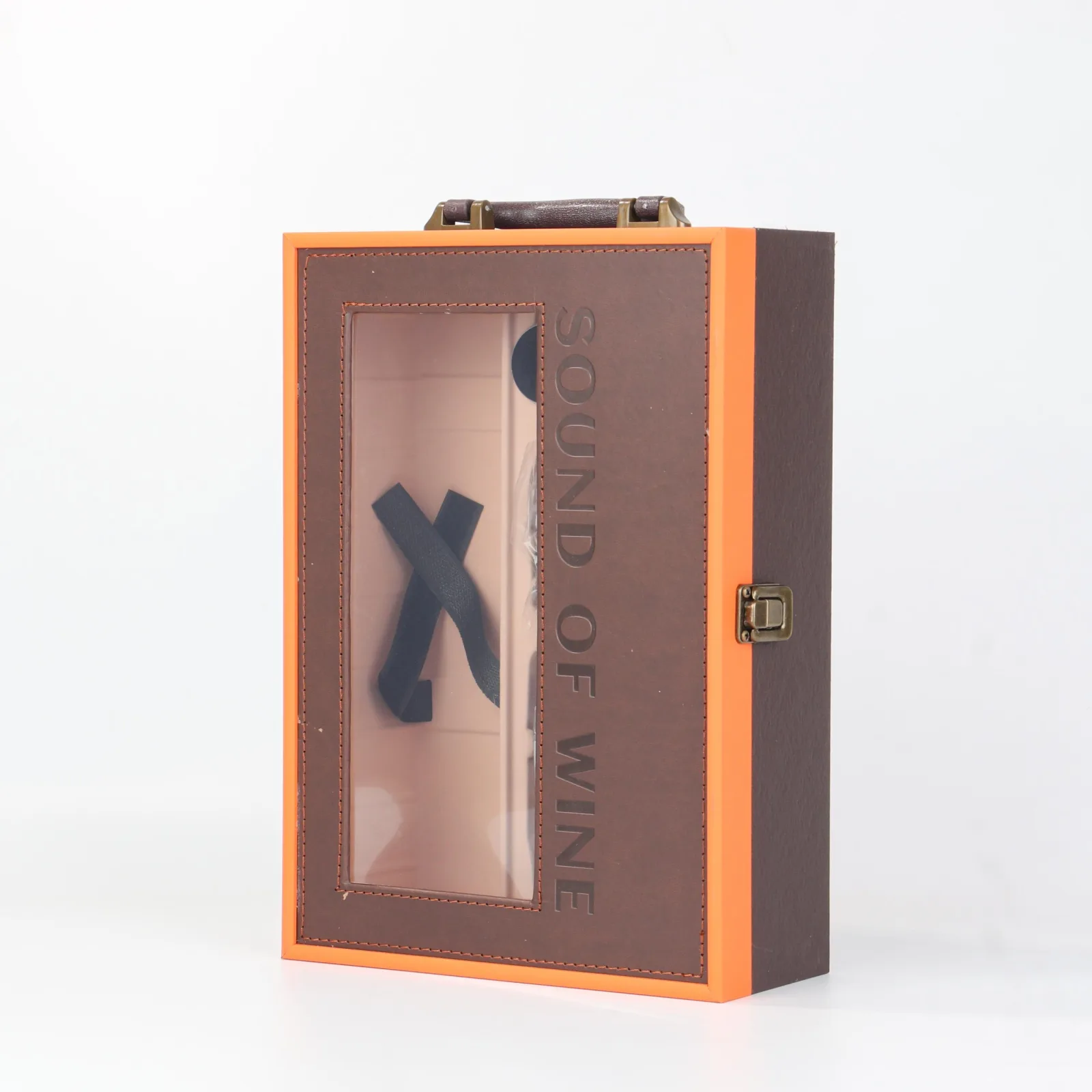
A lid-and-base box is the safest structure for a single champagne bottle. The base holds the bottle in the insert, and the lid lifts off without touching the neck. A magnetic closure box works the same way but adds a premium feel. Both are good choices for corporate gifting and retail. If you want a more distinctive unboxing, a double-door box can work, but it needs a well-fitted insert because the doors open outward and the bottle is exposed sooner.
Drawer boxes need care. When you pull the drawer open, the bottle slides with it. If the insert isn't tight enough, the bottle can shift forward and hit the front of the drawer. We see this most often with champagne because the bottle is heavier and the punt makes it sit differently. If you want a drawer box, we test it with the bottle loaded and we adjust the insert fit. It's not the wrong choice, but it's not the default.
For a quick look at structures, see our Single-Bottle Wine Gift Boxes and Magnetic and Foldable Wine Gift Boxes. If you want a more tactile finish, Leather Wine Gift Boxes can work for champagne, but the insert design is the same.
Finish: Dark Solids and Metallics
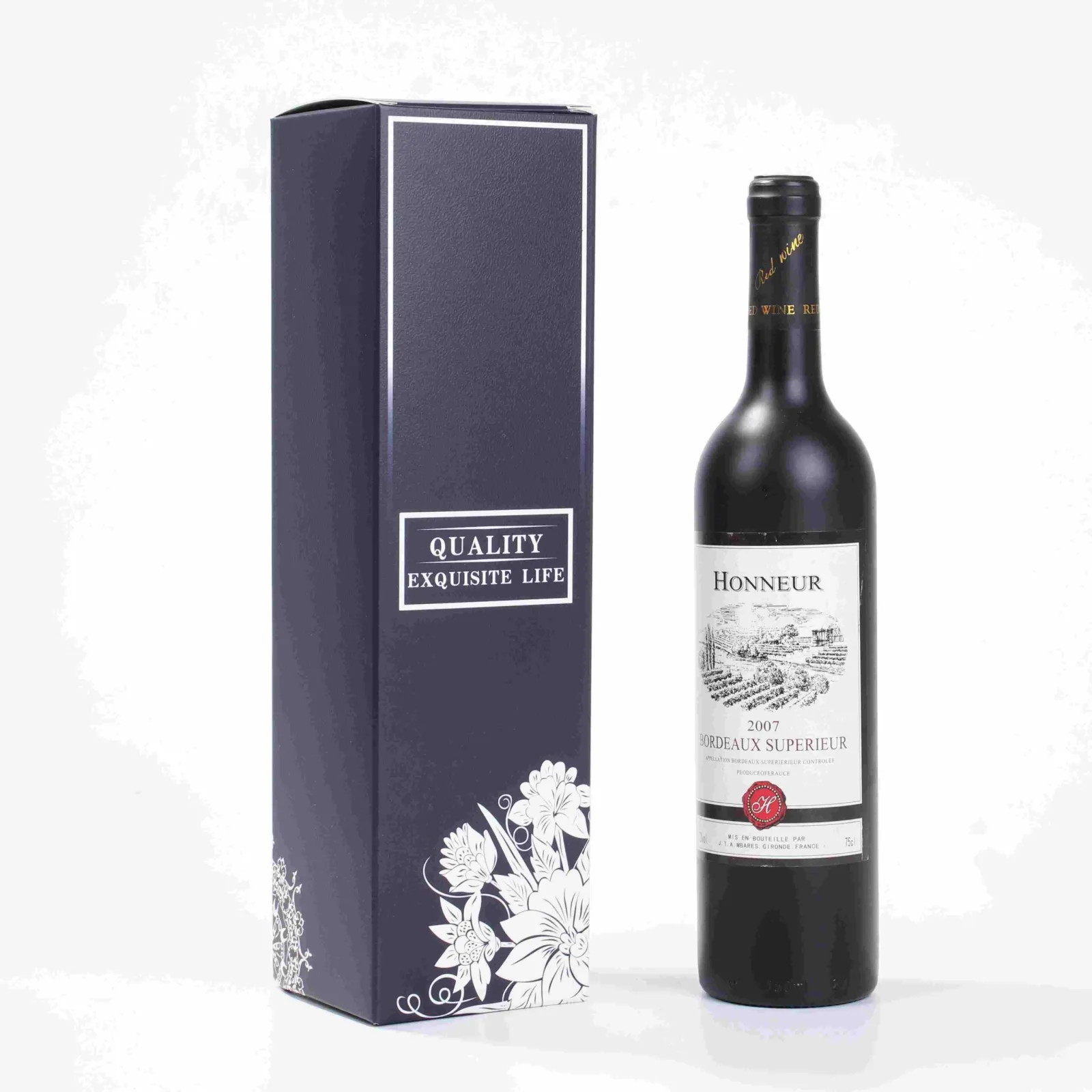
Champagne packaging tends to be black, deep blue, burgundy, gold or silver. Those colours are hard to hold. Black and deep blue are the hardest, because any variation in ink density shows up as a visible patch. We control colour with Pantone matching, first-article approval and mid-run sampling. The first article matters more on champagne boxes because the finish is usually a solid colour over a large area.
Metallics are a different problem. Gold and silver cardboard can look great, but the metallic layer reflects light unevenly. A small crease or a fingerprint becomes obvious. We recommend a matte or soft-touch lamination over metallics to reduce that. It also gives the box a more premium feel. If you want a metallic finish, ask for a printed sample before mass production.
One blunt verdict: a cheap glossy black box is not worth the money for champagne. It will show every mark and it will look worse after shipping. A matte or textured finish hides more and feels better in the hand.
Checks We Run Before Shipping
Every champagne box we make goes through the same in-house checks. We load a bottle into the box and drop it from 1.2 m onto six faces. Then we stack boxes with a top load of 40 kg or more for 24 hours. After that, we run a truck and sea vibration simulation to see if the bottle moves inside the insert. If it moves, we adjust the insert.
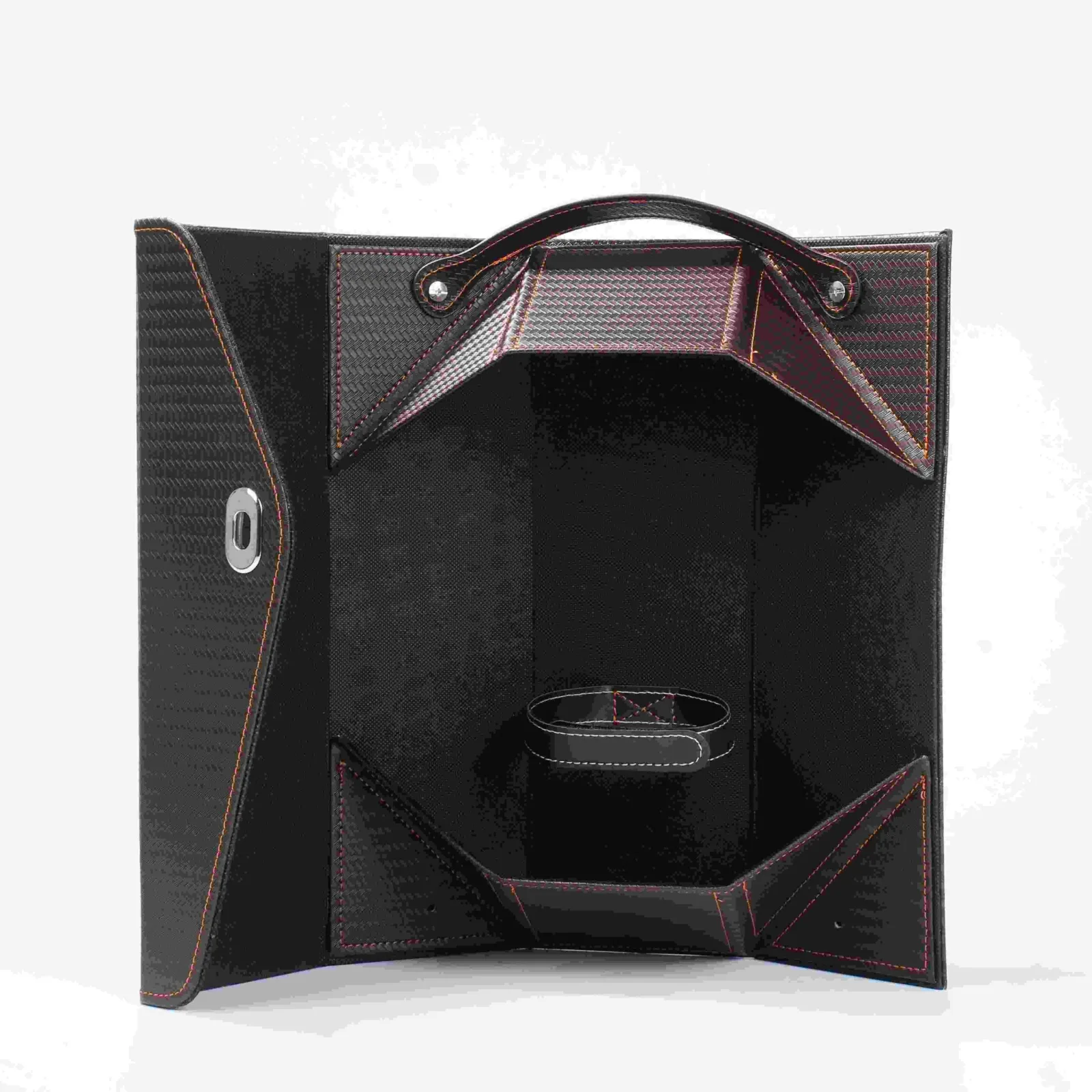
We also check the box body tolerance: plus or minus 2 mm. For foldable boxes, the creases must not crack, the magnet position is plus or minus 1 mm, and the corners are 90 degrees when erected. A foldable champagne box is riskier than a rigid box because the creases take more stress from the heavier bottle. We test that.
You can read more about these checks on our How we control quality page. If you're looking at a box for a heavier spirit bottle, the same rules apply, and you can see an example on our Single-Bottle Spirits Gift Box page.
What to Send for a Quote
To start, send us the bottle dimensions or a sample bottle, a reference design, your quantity and any special requirements. If you don't have a sample bottle, give us the base diameter, the height and the neck diameter. The base diameter is the one that matters most for the insert.
We make two sample types. A blank sample shows the structure and the insert fit. A printed sample shows the visual finish. For champagne, I recommend both, because the insert fit is the part that usually needs adjustment. We don't charge a fixed sample fee, but we do ask you to cover shipping.
Payment is by T/T or PayPal, and shipping is by air, sea or express. We have customers in over 30 countries, mostly in Europe and North America. Flexible MOQ for custom orders, sample before mass production, stable lead times. That's the short version.
Key points
- Standard wine inserts crush the cage. Grip the body, not the neck.
- Use 1400 g greyboard for champagne, not the 1200 g minimum.
- Lid-and-base and magnetic boxes work. Drawer boxes need careful insert fit.
- Black and deep blue are the hardest colours to hold. Approve the first article.
- Shake, tilt and invert tests catch insert problems before shipping.
Questions buyers ask
Will a standard wine gift box fit a champagne bottle?
Usually not safely. The champagne base is wider, the glass is heavier and the neck has a wire cage. A standard insert will often hold the bottle at the shoulder or the cage, which leads to damage. You need an insert shaped for the champagne body with extra neck clearance.
What is the best insert for a champagne gift box?
A four-point insert that grips the bottle body below the shoulder, with clearance at the neck for the cage and foil. Velvet trays and EVA foam both work well. The insert tolerance should be plus or minus 1 mm, and you should test with a real bottle.
Do I need a heavier board for champagne boxes?
Yes. Champagne bottles are heavy, so we recommend 1400 g greyboard instead of the 1200 g minimum. The heavier board resists compression at the base and keeps the box from bowing during shipping and stacking.
Send your bottle dimensions or a sample, and we'll build a champagne gift box that fits the bottle, not the other way around. Get a Quote
Put this on your bottle
Send the bottle sample or dimensions, quantity and a reference design. We reply with structure options and pricing.
- Email[email protected]